Article
Weatherbys the first provider for Angus Australia’s new DNA Direct platform

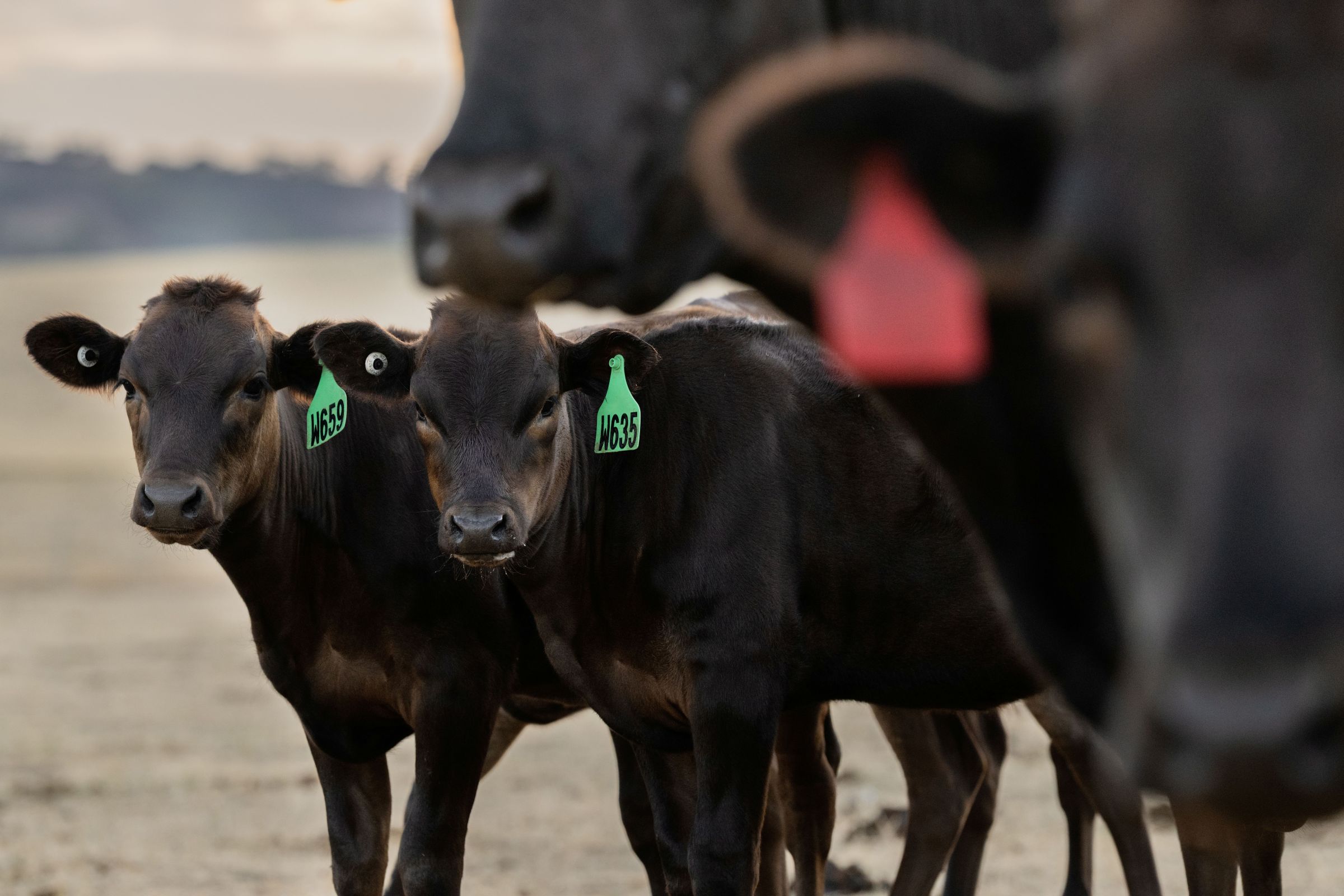


Eurofins Weatherbys will include the first DNA test for Hepatic Fibrinogen Storage Disease (HFSD) in Wagyu cattle to its existing services at no extra cost, to help breeders deal withthe inherited liver condition that is believed to be present in most herds and responsible for the loss of many affected animals.
Caused by the accumulation of fibrinogen protein in liver cells, HFSD disrupts normal metabolic processes. In affected animals, the condition can lead to poor liver function, ill thrift and a sickly phenotype.
Australian Wagyu Association (AWA) Chief Executive Officer, Dr Matt McDonagh, said HFSD was an important issue for the breed to understand.
“Initial testing of HFSD in the Wagyu population suggests a carrier frequency of 16.5%, which means that the harmful mutation is likely to be in most herds.”
Dr McDonagh said the difference between expected affected animals and those later identified in testing pointed to the likely survival impact of the condition.
“Based on the carrier frequency we would expect to see 2.7% affected animals in the population,” he said.
“However, we only see 0.6% affected animals, meaning that the majority of affected animals do not survive.”
“That means that roughly 80% of affected animals do not survive. Of the animals that do, we see a range of phenotype expression from low weight gain and poor condition, through to animals that are smaller than normal, but appear otherwise relatively unaffected.”
A clear result for a clear breeding decision
Without testing, recessive conditions such as HFSD can continue to affect herd performance through reduced growth, lower offspring survival and poorer reproductive performance inbreeding females.
“These impacts already rob profitability out of the Wagyu industry through lost performance and animal survival,” Dr McDonagh said.
HFSD is a recessive condition, which means carrier animals are not affected themselves. The risk comes when two carriers are joined, creating the chance of affected progeny.
For Wagyu breeders, the information is highly practical. Once they know which animals carry the mutation, they can make a clear decision about which matings to avoid.
“Once carriers are identified, breeders can avoid joining them to other carriers, removing the chance of producing affected calves from those matings. This is a simple productivity gain, by having higher weaning rates from fixed production costs,” Dr McDonagh said.
“They can also use HFSD-free bulls to limit the introduction of the condition into their herds and gradually reduce its frequency in retained females over time.”
More information from the same sample, at no extra cost
The HFSD capability has been built on a significant body of Wagyu data, with Eurofins Weatherbys examining results from about 7,500 cattle to support the accuracy of the test.
Eurofins Weatherbys Business Development Manager ANZ Michael-John Barry said the company will provide the results to those breeders free of charge and include HFSD detection in all future testing at no extra cost.
“HFSD is such an important issue for Wagyu breeders and we wanted to ensure that the testing information would be available on a large scale to help the industry to manage this condition,” Mr Barry said.
Mr Barry said being the first provider of a DNA test for HFSD came about due to the research on the condition coinciding with the development of the company’s advanced VERSA 85K SNP chip.
“This allowed us to include those markers on the new VERSA 85K chip, and give breeders more from the same sample and another vital piece of information they can use in their breeding program.
“If the information is already available and can help breeders make better decisions, we believe it should be put in their hands.”
Celebrating one year in partnership
The HFSD development comes as Eurofins Weatherbys and AWA mark one year of working together.
In that time, the partnership has helped expand the genomic tools available to Wagyu breeders and supported the delivery of emerging recessive condition testing.
“Since commencing services 12 months ago, Eurofins Weatherbys has offered a high quality and rapid turnaround genotyping service and provided support for delivery of new genetic recessives like HFSD, as well as A10,” Dr McDonagh said.
“These are now globally available so that Wagyu breeders around the world can work with AWA and Eurofins Weatherbys to obtain the most current information available to inform their breeding decisions.”
For Eurofins Weatherbys, the value of the partnership is in shortening the distance betweena DNA sample, a test result and a breeding decision.
“A test result only has value if breeders can put it to work,” Mr Barry said.
“AWA knows where the industry needs better information. Eurofins Weatherbys helps build the testing capability to deliver it.”
“That combination means we can move quickly on real industry issues and give breeders information they can act on before a problem carries into the next generation undetected.”